
Dr Qazi Nisar Ahmad
The foundation carries forward Dr Qazi Nisar Ahmad’s commitment to education and community welfare.
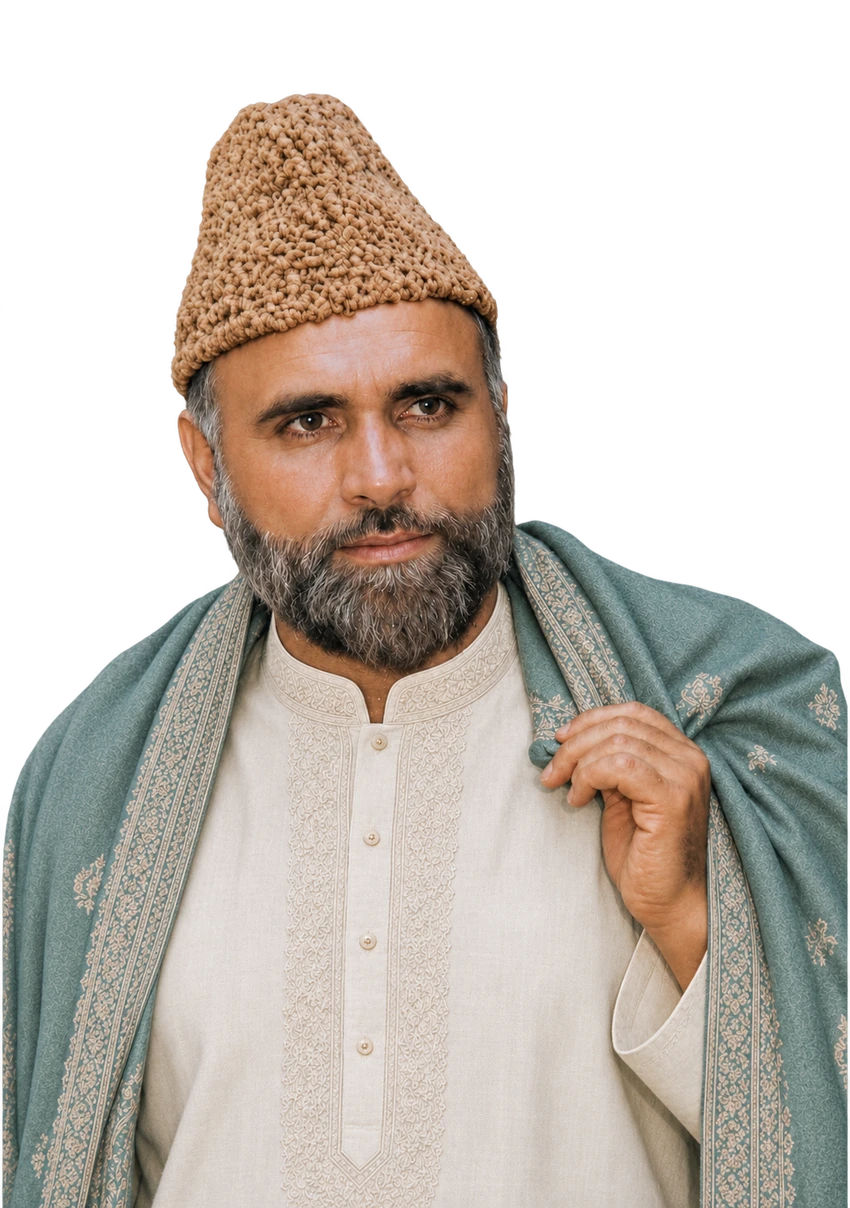
Early life and education
Dr Qazi Nisar Ahmad was born in 1952 in Anantnag, known locally as Islamabad. His father was Qazi Ghulam Mohammed, a religious preacher, and his grandfather was Qazi Qamar u Din. He received his early education at Nusrat ul Islam in Anantnag. Biographical accounts record further Islamic studies at Aligarh and Ashrafiya. Those years of study preceded his work as an educator, preacher and organiser in Kashmir.
After returning to Kashmir, he taught in the Department of Arabic at Kashmir University. He later devoted himself to preaching, first at Magarmal Bagh in Srinagar and later in Anantnag. He became the Mirwaiz of South Kashmir. In that role, his public teaching reached congregations across the region. The work associated with his public life included building institutions that widened access to education and organising assistance for families in need.
Khair e Aam Trust
Dr Nisar launched the Khair e Aam Trust in 1985. The trust carried out welfare work across South Kashmir, including household assistance and emergency support. Accounts of its early work describe regular help for widows and bereaved families, and shelter or rehabilitation for people affected by floods. It also helped families meet marriage expenses. An archival photograph associated with the trust shows a relief distribution at Chowgam.
These forms of help reflected the needs of the time. A family might need recurring support after a death, shelter after a flood, or practical supplies during a difficult period. Community welfare required organising resources for each of those situations. Today's Foundation carries that work forward through food drives, material assistance and community projects. Its gallery documents the supplies and preparation involved in several recent programmes.
Islamic Research Institute and scholarship
Dr Nisar established the Islamic Research Institute, known as Idara Tehqiqat e Islami, in Anantnag during the 1980s. Accounts give different founding years for the institute. Its educational mission was to make learning available to children and students whose families had limited means. His wider work supported the establishment of schools, libraries and mosques, providing places for study, reading, teaching and community gatherings.
His published works include Tehqeeq i Nazar, Salwat un Nabi, Harkat ul Fikriyah and Nikah e Baligah. He edited the monthly magazine Islamabad and wrote poetry about people on the margins of society. These writings sit alongside his public teaching and institutional work. They are part of the record of a scholar whose activities extended across the classroom, the mosque and the printed page.
Public service and remembrance
Dr Nisar raised concerns about human rights abuses and worked to document what families and communities were experiencing. He also argued for local representatives to manage Auqaf, the bodies responsible for religious endowments. His public life included political organising in the 1980s, including the founding of Ummat e Islami and involvement in the Muslim United Front, which contested the 1987 elections.
He was assassinated at Dialgam on 19 June 1994. Anantnag marks the anniversary each year. The foundation has used anniversary occasions to organise charitable work. Reporting from June 2021 records meals distributed to patients and attendants at district hospitals as part of the commemoration. These acts of service connect remembrance of Dr Nisar to the welfare and education work that continues under the foundation's name.